If you have ever walked through Burlingame and wondered why one block feels full of cozy porches while another is lined with stucco walls, red tile roofs, or low-slung ranch homes, you are seeing the city’s history in real time. For buyers and sellers alike, understanding those patterns can make a home search feel more focused and a pricing strategy more informed. This guide will help you recognize Burlingame’s signature home styles, understand where they tend to appear, and see how architecture connects to the city’s broader neighborhood character. Let’s dive in.
How Burlingame’s Architectural Mix Took Shape
Burlingame did not grow around one single architectural style. Its housing stock reflects several waves of development, from early subdivision growth in the 1910s and 1920s to postwar expansion in the north end.
According to local historical and city planning materials, Burlingame is best understood as a pattern-based city rather than a place of sharply fixed architectural districts. In practical terms, that means you will often notice recurring details like setbacks, porches, mature street trees, driveway placement, and overall scale just as much as a home’s formal style.
The city’s east and central areas grew from early subdivision efforts like the Easton additions, with many homes dating to the 1910s and 1920s. Later, Tudor and Mediterranean-inspired homes became more common, and after World War II, Ranch and Eichler homes expanded Burlingame’s architectural story in the north end.
Craftsman Homes in Burlingame
Craftsman homes are some of the easiest and most beloved prewar homes to spot in Burlingame. They usually feature one to one-and-a-half stories, broad gently pitched gables, and a prominent front porch that creates a welcoming street presence.
You will also often see wood materials, wide eaves, exposed rafter tails, knee brackets, and wood-sash windows. These homes were designed with practical comfort in mind, and many include built-ins and layouts that feel efficient and human-scaled.
For many buyers, the appeal of a Craftsman home is simple. You get warmth, architectural detail, and a strong connection between the house and the street through the porch and front-facing design.
Where Craftsman Homes Are Most Common
In Burlingame, Craftsman homes are most commonly found in the older neighborhoods developed during the 1910s and 1920s. The Easton Addition is one of the strongest areas to see this style, along with other early tracts near the city’s central spine.
If you are touring older east and central Burlingame neighborhoods, there is a good chance you will see Craftsman and bungalow homes woven into the streetscape. These areas tend to tell the clearest story of Burlingame’s earliest residential growth.
Spanish Revival and Mediterranean Homes
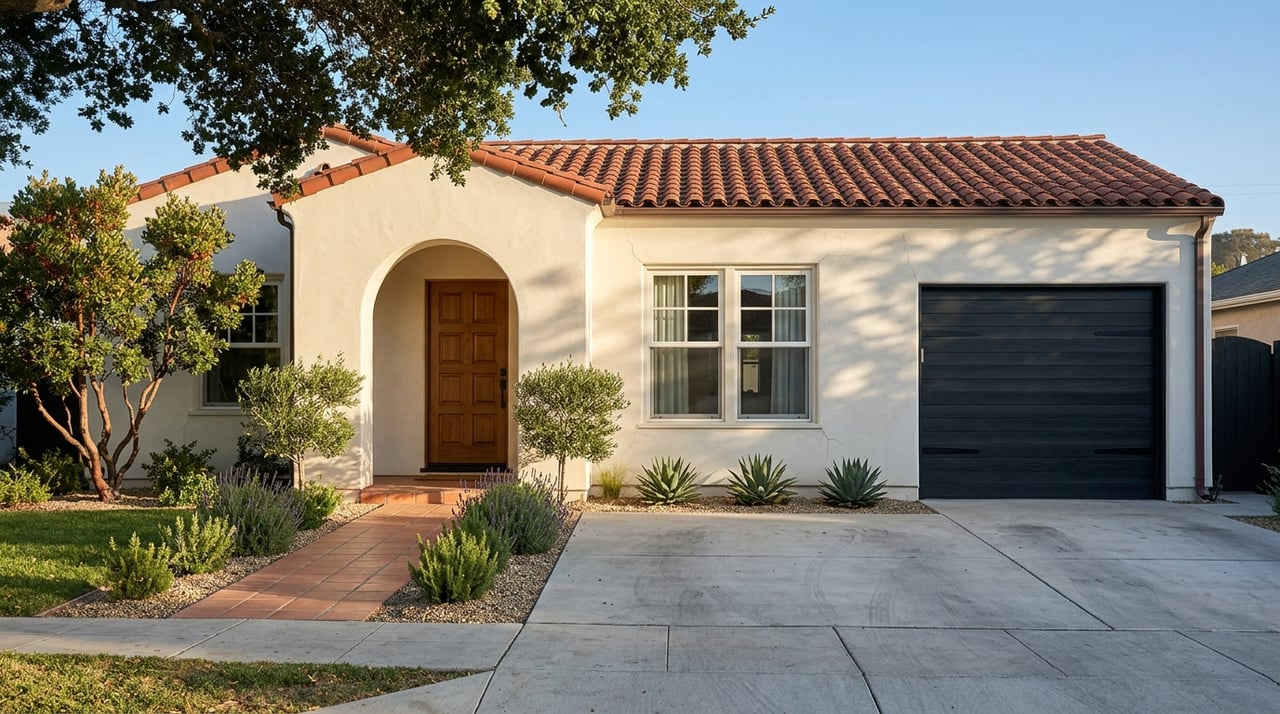
Spanish Revival and Mediterranean-style homes bring a very different look and feel to Burlingame’s prewar neighborhoods. These homes are typically marked by stucco walls, red clay tile roofs, arches, parapets, and asymmetrical facades.
Some are more ornate, while others are compact and simple. Even modest examples often create a sense of warmth and indoor-outdoor connection through courtyards, arched entries, and textured exterior materials.
For buyers, this style often stands out because it feels distinctly Californian. If you are drawn to stucco, tile, and a softer, sun-oriented exterior character, Spanish Revival homes may be especially appealing.
Where Spanish Revival Appears in Burlingame
City and preservation materials show that Mediterranean-style homes became popular in the early to mid-1920s and remain part of Burlingame’s pre-1940s housing mix. You are most likely to find them in the city’s older prewar neighborhoods rather than in later postwar subdivisions.
Examples also appear in and around the downtown core, where Spanish Eclectic buildings contribute to the layered look of the area. For a buyer or seller, that means older central and eastern sections of Burlingame are often the best places to look for this architectural style.
Tudor Revival in Burlingame
Tudor Revival homes have a storybook quality that makes them easy to recognize. Common features include decorative half-timbering, steeply pitched roofs, tall narrow windows, asymmetrical shapes, and decorative chimneys.
Many Tudor homes are relatively compact, often one to one-and-a-half stories, with side-facing gables and prominent front cross gables. That combination gives them a picturesque look that feels very different from both Craftsman and Spanish Revival homes.
For buyers who appreciate character and charm, Tudor homes often offer cozy interiors and memorable curb appeal. For sellers, those same visual details can be a strong part of a home’s presentation and marketing story.
Burlingame’s Notable Tudor Pocket
Burlingame’s best-known Tudor cluster is in Willborough, a neighborhood conceived during the Depression era with an English village identity. Local historical sources note that the tract included 22 Tudor-styled homes designed by Burlingame architects Russell B. Coleman and W.C.F. Gillam.
This pocket sits between Palm Drive, Oak Grove, and California Drive. If you want to understand Tudor Revival in Burlingame, this is one of the clearest places to start.
Ranch and Eichler Homes in North Burlingame
By the postwar period, Burlingame’s housing story shifted again. Ranch and Eichler homes became more common, especially in neighborhoods created after the subdivision of the Mills Estate on the north end.
These homes tend to be one-story, low-slung, and much less ornamented than earlier styles. Typical features include large grouped windows, open floor plans, attached garages, and a stronger connection to patios or rear gardens.
For many buyers today, Ranch and Eichler homes appeal because they support easy single-level living and a more open interior flow. They can feel especially practical if you want less formality and more direct access to outdoor space.
Where Postwar Styles Stand Out
North Burlingame, Mills Estate, and Trousdale are some of the clearest areas to see Burlingame’s postwar architectural layer. Trousdale Drive, in particular, is tied to the Mills Estate subdivision of 1954.
If you compare these neighborhoods with older east and central Burlingame, the shift is clear. The architecture becomes more horizontal, more streamlined, and more focused on indoor-outdoor living than on decorative exterior detail.
Why Neighborhood Pattern Matters
One of the most helpful things to know about Burlingame is that the city values neighborhood compatibility as much as style labels. For new homes and many second-story additions, design review looks closely at how a home fits the surrounding pattern.
That pattern includes factors like massing, scale, setbacks, porches, garage placement, and the rhythm created by tree-lined streets. So even when newer infill homes appear, the goal is typically to respect the existing neighborhood fabric rather than introduce a completely separate architectural tradition.
This matters if you are buying, selling, or planning future improvements. In Burlingame, the conversation is often not just about whether a home is Craftsman or Spanish Revival, but how it relates to the broader feel of the block.
A Quick Neighborhood Style Guide
If you want a simple way to think about Burlingame architecture, this shorthand can help:
- Easton Addition: Strong concentration of prewar homes, including Craftsman and other early revival-era styles.
- Willborough and the Burlingame Terrace pocket: Burlingame’s clearest Tudor Revival cluster.
- Burlingame Park: Part of the city’s prewar layer, with Craftsman and Spanish Revival homes in the mix.
- North Burlingame, Mills Estate, and Trousdale: Strongest concentration of Ranch and Eichler homes.
- Downtown and El Camino Real: A layered corridor with homes and buildings representing many eras, from Craftsman bungalows to Spanish Eclectic and newer infill.
What This Means for Buyers and Sellers
If you are buying in Burlingame, architecture can help narrow your search faster. A buyer who loves porches, woodwork, and classic bungalow proportions may feel most at home in older prewar areas, while someone prioritizing single-level living and open layouts may focus more on the north end.
If you are selling, your home’s style is part of its story, but so is its setting within the neighborhood. Buyers respond not only to the house itself, but also to how it fits the block, the street rhythm, and the broader character of Burlingame.
That is why local context matters so much in this market. Understanding whether a home is best positioned through its architectural details, its neighborhood setting, or both can shape everything from pricing to presentation.
Whether you are searching for a classic Craftsman, a charming Tudor, a warm Spanish Revival, or a clean-lined Ranch, Burlingame offers a rare mix of architectural variety across a relatively compact city. If you want help understanding how a specific home fits into that bigger picture, Sandra Comaroto can help you navigate Burlingame with the kind of local insight that makes each decision clearer.
FAQs
What architectural styles are most common in Burlingame?
- Burlingame is known for a mix of Craftsman, bungalow, Tudor Revival, Spanish or Mediterranean Revival, Ranch, and Eichler homes, with newer infill added in later years.
Where can you find Craftsman homes in Burlingame?
- Craftsman homes are most common in Burlingame’s older 1910s and 1920s neighborhoods, especially in the Easton Addition and other early central and eastern tracts.
Where are Tudor Revival homes located in Burlingame?
- The clearest Tudor Revival pocket in Burlingame is Willborough, between Palm Drive, Oak Grove, and California Drive.
Where should buyers look for Spanish Revival homes in Burlingame?
- Spanish Revival and Mediterranean-style homes are generally found in Burlingame’s older prewar neighborhoods, including parts of the downtown core and nearby residential streets.
Which Burlingame neighborhoods have Ranch and Eichler homes?
- Ranch and Eichler homes are especially common in North Burlingame, Mills Estate, and Trousdale, where postwar development became more prominent.
How does Burlingame review new home design?
- Burlingame looks at neighborhood compatibility through factors like massing, scale, setbacks, porches, garage placement, and street rhythm rather than relying only on a style label.