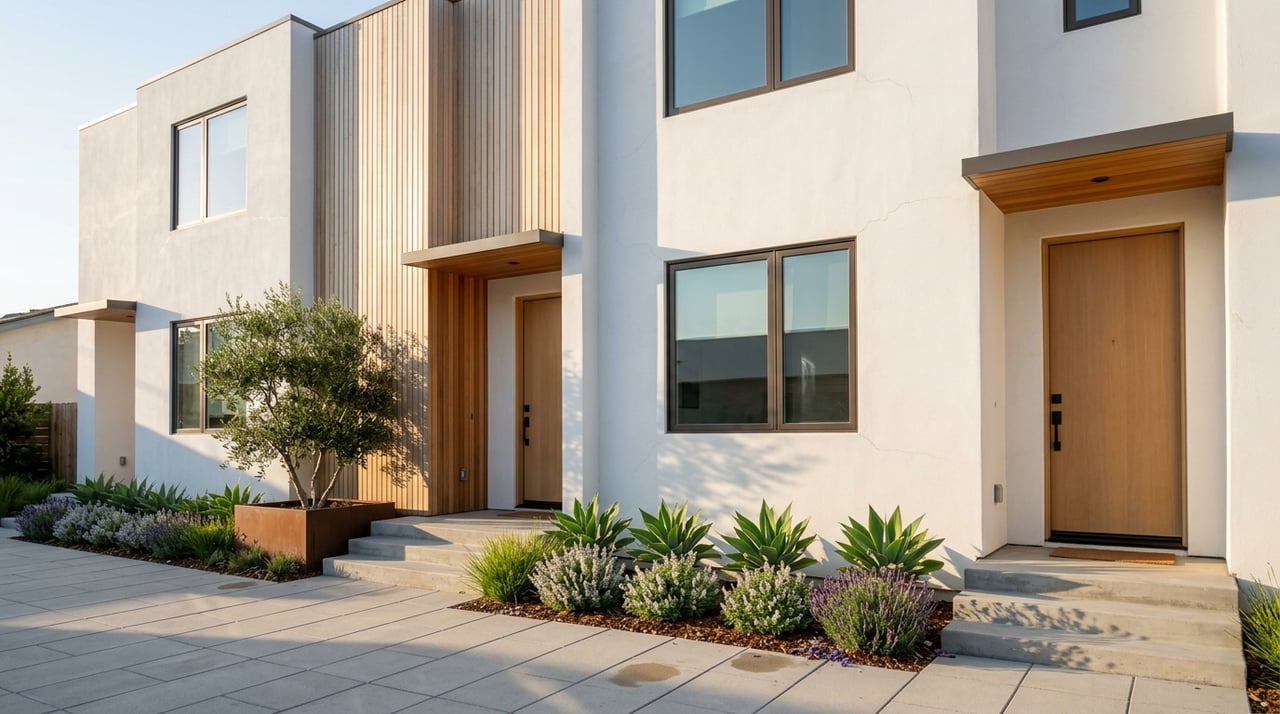
If your schedule is already packed, the idea of keeping up with a detached home can feel like one more full-time job. In Burlingame, condos and townhomes can offer a practical middle ground: ownership with less exterior upkeep, often in locations that make commuting and daily errands easier. If you are trying to balance convenience, monthly costs, and long-term fit, this guide will help you understand what to look for and how to shop smart. Let’s dive in.
Why attached homes stand out in Burlingame
Burlingame’s housing mix helps explain why condos and townhomes matter so much for busy buyers. According to the city’s Housing Element, about 48% of housing units were single-family homes in 2020, about 48% were multifamily units, and only about 3% to 4% were attached single-family homes such as townhomes.
That means townhomes are a relatively limited part of the local inventory, while condos and other multifamily homes make up most of the attached-home options. If you are searching for this type of property, your choices may be more selective and more location-driven than a detached-home search.
Where Burlingame condos and townhomes cluster
In Burlingame, attached housing is not spread evenly across the city. Planning documents show that many condo, townhome, and mixed-use opportunities are concentrated in areas such as Downtown, North Burlingame, North Rollins Road, California Drive, and Broadway.
The city notes that much of its growth has come from infill development on redeveloped commercial sites, especially in Downtown, North Burlingame, and North Rollins Road. Downtown in particular was planned for more intense development with transit access, walkability, and nearby services.
Current city project pages reinforce that pattern. Residential and mixed-use projects have been proposed or built along corridors like El Camino Real, California Drive, Lorton Avenue, Ogden Drive, Park Road, and Ingold Road. For you as a buyer, that often means newer attached-home options are more likely to show up near transit routes and commercial corridors than on traditional detached-home blocks.
Why busy buyers are drawn to these locations
For many buyers, convenience is the biggest reason to consider a condo or townhome in Burlingame. The city points residents to Caltrain, BART, SamTrans, and local shuttle options, and Caltrain currently lists both Burlingame and Broadway stations, with regular service at Burlingame and weekend-only service at Broadway.
The city’s Housing Element identifies Burlingame and Broadway as the two major transit stops in town, with Millbrae Intermodal Station just outside city limits. It also notes that North Rollins Road and North Burlingame mixed-use areas are close to Millbrae, which helps explain why development has clustered there.
If you commute, travel often, or want easier day-to-day mobility, that matters. Burlingame’s shuttle network also adds another layer of convenience, including service connecting Millbrae BART and Caltrain with Burlingame destinations, plus routes that serve Rollins Road, Bayshore Highway, Airport Boulevard, the Easton Addition, and Mills-Peninsula Medical Center.
SamTrans also serves Burlingame on routes 292 and 397, and those routes stop at SFO. For relocation buyers, frequent travelers, and professionals with changing schedules, that kind of access can be a major part of the appeal.
Condo vs. townhome: what fits your lifestyle
Condos and townhomes can both work well when you want ownership without taking on the full upkeep of a detached house. Still, they do not feel exactly the same in daily life.
A condo often works well if you want a simpler footprint and a more lock-and-leave setup. A townhome may appeal more if you want a layout that feels a bit more like a house while still avoiding some of the maintenance that comes with a standalone property.
Based on Burlingame’s housing patterns, attached homes tend to suit time-constrained professionals, relocation buyers, and downsizers. If your priority is reducing exterior maintenance while staying close to transit, services, and SFO, this segment of the market may be worth a close look.
If you strongly prioritize privacy, larger yards, and fewer shared rules, a detached home may still be a better match. The right answer usually comes down to how you want to spend your time, not just how many square feet you want.
What to budget beyond the mortgage
One of the biggest mistakes buyers make with condos and townhomes is focusing only on the mortgage payment. In a shared-interest development, your monthly cost usually includes HOA dues, and those dues can increase over time.
The California Department of Real Estate also notes that owners in common-interest developments need to be prepared for assessments. That is especially important in Burlingame, where the city says about 81% of housing units were built before 1980.
Older buildings can come with higher maintenance needs. Roofs, siding, paving, landscaping, and hidden systems can all become more expensive over time, especially in converted or aging properties.
When you compare homes, look at the full ownership picture, including:
- Monthly HOA dues
- Recent dues increases
- Reserve funding
- Possible special assessments
- Ongoing building maintenance needs
- Insurance-related disclosures
A home that looks affordable at first glance may feel different once you include the shared costs.
What to review before you close
California law gives buyers important disclosure rights in common-interest developments. Before closing, the seller must provide governing documents, the latest annual budget and reserve materials, a statement of current assessments and unpaid charges, and notices of unresolved violations.
The annual budget report must also include reserve summaries, reserve-funding information, possible special assessments, and insurance-related disclosures. Reserve studies must include a visual inspection at least once every three years when the legal threshold is met.
These documents are not just paperwork. They help you understand the financial health of the association, the condition of major components, and the likelihood of future costs.
Smart questions to ask on a tour
When you are touring a condo or townhome, a few practical questions can tell you far more than the finishes alone. These are often the questions that matter most to your monthly budget, flexibility, and resale comfort.
Ask questions like:
- What does the HOA fee cover?
- How large are the reserves?
- Is a special assessment likely?
- What major components are nearing replacement?
- Are there unresolved violations?
- What restrictions are in the governing documents?
Those answers can help you compare one property to another in a more realistic way. They also help you avoid surprises after closing.
How to search efficiently in Burlingame
Because townhomes are a small share of Burlingame’s housing stock, and because many attached-home options cluster in specific corridors, this search tends to reward focus. It often helps to start with your real daily priorities rather than a long wish list.
For example, you may want to decide which matters most:
- Fast access to Caltrain or Millbrae connections
- Easier access to SFO
- A more house-like layout
- A newer infill building
- Lower-maintenance living
- Proximity to Downtown Burlingame services
Once your priorities are clear, it becomes easier to narrow the search and move quickly when the right opportunity appears. In a market like Burlingame, that kind of clarity can save time and reduce decision fatigue.
Why local guidance matters
Attached-home purchases can look simple on the surface, but the details often drive the outcome. Location, HOA structure, building age, reserves, disclosures, and future maintenance exposure all shape whether a property truly fits your lifestyle.
That is where local, hands-on guidance can make a real difference. In a selective market like Burlingame, you want advice that goes beyond square footage and finishes and helps you weigh the tradeoffs that matter most to your schedule, budget, and long-term plans.
If you are exploring condo or townhome living in Burlingame, working with an agent who understands the city’s housing patterns, transit-oriented pockets, and inventory nuances can help you make a more confident decision. When you are ready for a personalized conversation, connect with Sandra Comaroto for thoughtful, high-touch guidance tailored to your goals.
FAQs
What makes Burlingame condos appealing for busy buyers?
- Burlingame condos often appeal to busy buyers because they can offer less exterior maintenance and are frequently located near transit, mixed-use corridors, services, and SFO access.
Where are many Burlingame townhome and condo options located?
- Many attached-home opportunities in Burlingame are concentrated in Downtown, North Burlingame, North Rollins Road, California Drive, and Broadway, based on city planning patterns and current project activity.
What should you review before buying a Burlingame condo?
- Before buying a Burlingame condo, you should review the HOA governing documents, annual budget, reserve information, assessments, unpaid charges, and any unresolved violation notices required under California law.
How are Burlingame townhomes different from condos for buyers?
- Burlingame townhomes may appeal to buyers who want a more house-like layout, while condos may be a better fit for buyers who want a simpler footprint and a more lock-and-leave ownership style.
Why do HOA reserves matter in a Burlingame attached home purchase?
- HOA reserves matter because they help cover future repair and replacement costs, and low reserves can increase the chance of special assessments or higher dues later.
Is Burlingame a good place to look for transit-friendly attached homes?
- Burlingame can be a strong option for transit-friendly attached homes because the city’s condo and mixed-use development patterns often cluster near Caltrain stations, Millbrae connections, shuttle routes, and SamTrans service.