Are you outgrowing your current place and wondering how Burlingame’s schools and neighborhoods fit your next chapter? You want good school options, parks and activities close by, and a home that actually works for homework, sports gear, and quiet time. This guide connects the dots between school boundaries, walkable areas, housing types, and day‑to‑day logistics so you can plan with confidence. Let’s dive in.
Last verified February 2026. Always confirm boundaries, programs, and transit details with official sources before you buy.
How Burlingame public schools work
Burlingame’s public K–8 schools are run by the local Burlingame School District. Public high schools are part of the San Mateo Union High School District, with Burlingame High School serving the city. Attendance is set by boundaries tied to your exact home address. Boundaries and feeder patterns can change, so verify them during your home search.
Families also consider private or parochial schools and nearby charter options. Program details, such as dual language, special education services, and advanced coursework, vary by campus and grade level. Use official resources to compare programs, class size, and performance indicators.
How to confirm your assigned schools
Start with the official district tools. Use the Burlingame School District website to identify current K–8 attendance areas and registration steps. For high school, review the San Mateo Union High School District site to see which high school serves a specific address and to learn about programs and enrollment.
- K–8 verification and enrollment: check the Burlingame School District official website.
- High school assignment and programs: see the San Mateo Union High School District.
- State performance indicators: compare campuses on the CA School Dashboard.
Tip: If you are near a border street, call the district registrar to confirm assignments in writing. If you plan to request a transfer, note application windows and capacity limits.
Neighborhood profiles for family life
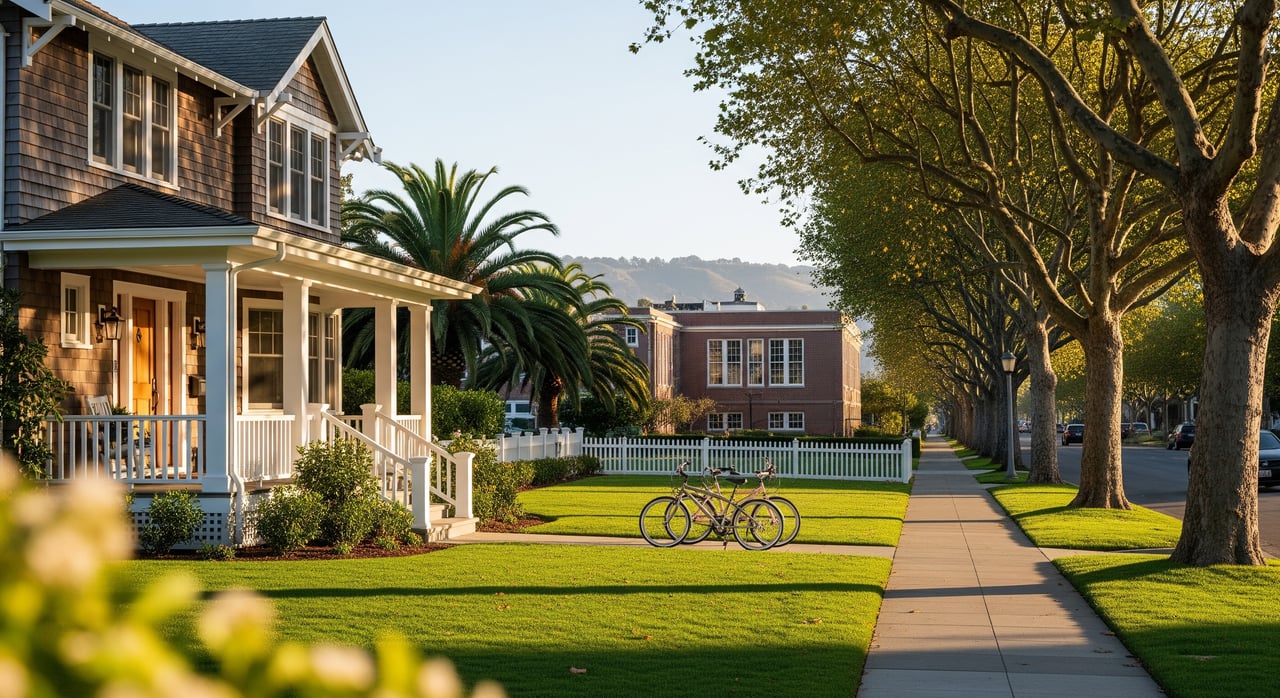
Every area in Burlingame offers a different balance of yard space, walkability, and commute. Use these profiles as a starting point, then confirm the assigned schools for any address.
Downtown and the Caltrain corridor
You are close to Burlingame Avenue’s shops, cafes, and services, plus the Caltrain station for Peninsula and San Francisco commutes. Housing often includes condos, townhomes, and smaller-lot single‑family homes. Yards tend to be modest, which is a fair trade if you value walkability and after‑school activities downtown.
Flatland residential near Broadway and El Camino
Tree‑lined streets and classic single‑family homes draw many upsizing families here. You will find mid‑century ranches and bungalows, often with room to add a second story. Many blocks sit within elementary attendance areas, though boundary lines can follow major streets, so double‑check any home address.
Hillside neighborhoods
Hillside areas offer larger lots, more square footage, and quieter streets. You may gain space for a home office, playroom, or guest suite, along with views in select pockets. Expect longer, hillier drives to downtown and transit, and confirm which elementary and middle schools serve your micro‑area.
South and city‑edge pockets
Homes near city borders can deliver extra bedrooms or yard for the price. School district lines can shift quickly at city edges, so verify both K–8 and high school assignments for any address. Compare commute routes to Highways 101 and 280, especially if you split school drop‑offs between siblings.
Housing types and what to expect
- Older single‑family homes. Early 20th‑century Craftsman and Victorian‑era homes offer charm and walkable locations. Many families plan renovations to add bedrooms or open floor plans.
- Mid‑century ranches and bungalows. Common on the flats, these lots often support second‑story additions for long‑term flexibility.
- Hillside properties. Larger parcels and more privacy are typical. Terrain and construction styles vary, and commutes to transit can be longer.
- Condos and townhomes. Concentrated near downtown and transit. You gain walkability and low maintenance, though private yard space is limited.
- New construction. Supply is limited in a built‑out city. Many buyers budget for remodeling or replacement to create the layout they want.
Price planning and tradeoffs
Burlingame is a higher‑cost market relative to county and state medians. Upsizing households often trade walkability for square footage and yard, or they stay closer to downtown and focus on efficient floor plans. For price bands, look at entry single‑family, midrange 3–4 bedroom homes, and larger hillside properties, then compare recent sales. Use current local MLS reports or trusted research sources and confirm the timeframe on any data you review.
Commute and transit factors
Caltrain access matters if you commute to San Francisco or Peninsula tech hubs. Living near the station can simplify mornings, but plan around school drop‑off traffic. Check routes to Highways 101 and 280 if you rely on driving.
SFO proximity is a plus for frequent flyers. Weigh airline noise and traffic at different times of day as part of your home tours. Review official resources and visit prospective neighborhoods at school start and end times.
- Caltrain service and stations: review Caltrain schedules and maps.
Enrollment options beyond your boundary
Districts may allow in‑district transfers and interdistrict permits based on capacity and timelines. Each program has its own process, so read the rules and apply early. For broader context, families also look at private and parochial schools, as well as community‑based preschools for younger children.
- Find public school performance and demographics on the CA School Dashboard.
- Browse parent reviews on GreatSchools and Niche’s K‑12 pages, then verify details with the districts.
Parks, after‑school programs, and weekend life
Plan for daily routines as much as the house itself. Look for safe walking and biking routes to neighborhood parks, community centers, libraries, and youth sports fields. Larger recreation spaces and aquatic programs matter as kids move from elementary into middle and high school.
- Explore facilities and programs through the City of Burlingame Parks and Recreation Department.
A ten‑year outlook for your move
Think through the next decade of space needs. Many families plan for a homework zone, flexible guest room, and storage for sports and music gear now, then a teen hangout later. Resale tends to benefit homes that align with stable school access, thoughtful additions, and proximity to daily amenities.
Your quick‑start checklist
- Confirm school assignment for each target address using district tools, then call the registrar to verify.
- Walk the neighborhood within a half‑mile of the assigned elementary and along likely school routes.
- Compare commute scenarios for downtown versus hillside areas, including morning drop‑off times.
- Align the floor plan with the next ten years, not just the next two.
- Price‑check by property type and neighborhood using current local MLS reports, then parse what you trade for yard, bedrooms, or walkability.
Ready to match the right school access with the right home and neighborhood fit? Request a personalized consultation with Sandra Comaroto to map options, verify boundaries, and plan a search that fits your family’s next chapter.
FAQs
How do I verify a Burlingame home’s assigned schools?
- Use the Burlingame School District site for K–8 and the San Mateo Union High School District for high school, then call the registrars to confirm any address near a boundary.
Which Burlingame areas are walkable to elementary schools?
- Walkability varies block by block, so map a 0.5 to 1.0 mile radius around the assigned elementary and test the route during school hours before you buy.
What housing types fit a growing family in Burlingame?
- Many upsizers choose mid‑century homes on the flats for expansion potential or hillside properties for larger lots and privacy, then tailor with renovations.
How do transfers work if I want a different school in Burlingame?
- Districts offer in‑district and interdistrict options based on capacity and deadlines, so review policies early and submit complete applications within the window.
How will my commute change if I move from downtown to the hills in Burlingame?
- Downtown offers shorter walks to Caltrain and services, while hillside homes add space but usually require longer drives to transit and school drop‑offs.
Where can I find after‑school programs and city activities in Burlingame?
- Start with the City of Burlingame Parks and Recreation program catalog, then check school‑site aftercare and local youth sports leagues for seasonal offerings.