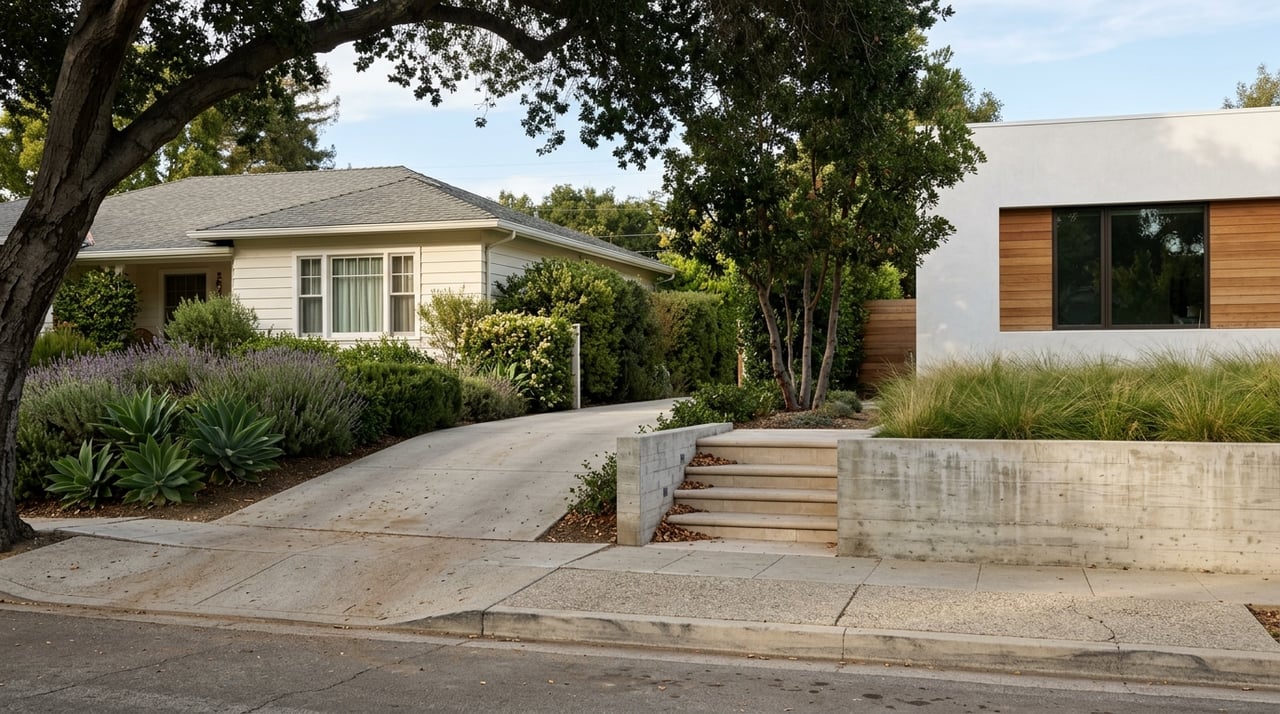
Two Hillsborough homes can look nearly the same from the curb and still sell for very different prices. If you have ever wondered why, you are not alone. When you buy or sell here, small differences in lot shape, slope, views, and neighborhood identity add up to big swings in value. In this guide, you will learn how Hillsborough’s neighborhoods and micro-markets work, what truly drives price, and how to compare homes with confidence. Let’s dive in.
Hillsborough’s structure drives value
Hillsborough is almost entirely single-family residential, with no commercial districts. That low-density character creates lasting scarcity and helps sustain estate-scale lots. The Town’s planning documents set a minimum new-lot size of one-half acre and a typical minimum frontage of 150 feet, which keeps density low and lot sizes large. You can confirm these baseline rules in the Town’s adopted Housing Element.
- Learn more in the Town’s Housing Element and planning files: Hillsborough 2014–2022 Housing Element
The result is a market known for multi-million-dollar single-family properties on generous parcels. Within those broad parameters, each neighborhood pocket has its own profile.
Neighborhood names to know
Hillsborough uses specific neighborhood names on its official map. Using these local labels helps you compare like with like. Look for names such as Carolands, Lakeview, Buckeye/Crystal Springs, Country Club Manor, Uplands, Hillsborough Park, and Tobin Clark.
- See the official map: Town of Hillsborough neighborhood map
Micro-market profiles
Lower Hillsborough
Lower Hillsborough refers to the areas near the Burlingame border and lower-elevation corridors. Many addresses enjoy convenient access to Burlingame Avenue and Caltrain. Lots are still large by Peninsula standards, often at or above the Town’s half-acre baseline, and many properties sit on relatively flatter terrain. That mix of access and usability makes these streets consistent performers.
Valuation focus: prioritize walkability and commute options in comps, along with lot utility and yard usability. Combine the neighborhood context from the Town map with minimum lot guidance in the Housing Element.
Carolands
Carolands sits in the southwest “West Area” near the Crystal Springs corridor and includes the historic Carolands Chateau. Architectural pedigree runs deep here, from Beaux-Arts and chateau-inspired residences to thoughtfully rebuilt estates. Proximity to open space and recreation adds to the appeal, with easy access to Sawyer Camp Trail and the Crystal Springs area.
- Neighborhood context and history: Carolands Chateau
- Recreation nearby: Sawyer Camp Trail overview
Valuation focus: buyers often pay for provenance, larger and deeper parcels, and privacy. Two homes with similar square footage can diverge on usable acreage, view protection, and historic detailing.
Crystal Springs, Buckeye, and Lakeview
These neighborhoods extend toward the Crystal Springs watershed and ridgelines. Steeper slopes are common, which can mean panoramic Bay or reservoir outlooks in some locations. Lots are typically half-acre and up, but the amount of flat yard will vary widely by street.
- Terrain and development constraints: Town Housing Element on topography
- Official neighborhood labels: Town neighborhood map
Valuation focus: adjust for slope and land usability, not just total acreage. Protected view corridors can add material value, while steep access and retaining systems add cost.
Country Club Manor area
Streets around Burlingame Country Club form a prestige pocket with wooded lots and a classic estate feel. Adjacency to a private 18-hole club and mature neighborhood character shape consistent demand.
- Club information for context: Burlingame Country Club
Valuation focus: amenity adjacency matters. A home on a quiet interior street can trade differently than a similar home near the fairway, even within the same neighborhood.
Uplands, Hillsborough Park, and Tobin Clark
These named pockets include some of Hillsborough’s older, tree-lined streets and former estate subdivisions. Expect a mix of traditional architecture, irregular lot shapes, and distinct street character. Some addresses are also near private school options, which can be an added convenience for certain buyers.
- Neighborhood names: Town neighborhood map
- Private school nearby: Crystal Springs Uplands School
Valuation focus: consider historic fabric, privacy, and school proximity as specific features when comparing nearby sales.
Why similar homes sell differently
In Hillsborough, a handful of attributes make one sale price move while another stays put. When you evaluate comps, capture these details.
- Lot size and usable yard. Acres matter, but so does how much of the yard is flat and functional. Track total acreage, estimated flat area, outbuildings, and lot shape. Buyers pay for usable land, and the Town’s half-acre minimum provides a clear baseline. See the Housing Element for lot-size norms.
- Topography and slope. Slope can deliver big views, but it raises construction and drainage complexity. Account for driveway grade, retaining walls, and visible cut or fill. The Town notes steep sites as a planning consideration in its Housing Element.
- View and elevation premium. Direction, quality, and permanence of a view all matter. Academic research shows that premiums vary by view type and clarity, so avoid a one-size-fits-all percentage. For background, see this review of view premiums: The Value of a View.
- Architecture and pedigree. Architect-designed or historically notable homes, like chateau-era properties in Carolands, can trade at a premium when quality and provenance are documented. Learn about neighborhood history here: Carolands Chateau.
- Schools, clubs, and access. Assigned public schools, access to private schools such as Crystal Springs Uplands School, proximity to Burlingame, and practical commute options can influence demand at the street level.
- Inventory and scarcity. Many streets see few sales each year. Lower turnover can amplify premiums for a well-prepared listing. The Town’s planning record highlights how lot-size rules and terrain continue to limit supply. See the Housing Element.
Compare homes like a pro
Use a simple, repeatable process when you analyze a property. The right data sources help you make clean, local adjustments.
- Start with official records. Pull the county parcel record for lot size and legal description. A public gateway is available here: San Mateo County assessor search.
- Confirm the micro-market. Label the neighborhood using the Town neighborhood map. The name matters when you select comps on the same or adjacent streets.
- Measure land utility. Aerials help you estimate flat yard versus slope. For hillside sites, use federal elevation data to understand grade and ridgelines: USGS National Map data.
- Check environmental overlays. Confirm if a parcel touches flood zones, which is uncommon but worth verifying in lower corridors: FEMA Flood Map Service Center.
- Review Town permits. Look for major remodels, additions, and systems updates. Visible quality differences often trace back to permitted work.
- Weigh view and orientation. Note what the main rooms look toward and whether that outlook is likely to remain open.
When it is time to set a price or write an offer, use paired local sales in the same micro-market to derive adjustments for acreage, view, and condition. Avoid one-size-fits-all dollars per square foot. Treat views as a separate amenity and quantify them based on local sales pairs, supported by broader research.
Real-world contrasts
Here are a few practical ways two similar homes can diverge on price.
- Two Lower Hillsborough homes on near-identical lots. One has a broad, level backyard that supports a pool site and outdoor kitchen. The other’s yard slopes quickly behind the house, with limited flat area. Expect the level-lot home to command a premium in this pocket where usability is a key benefit.
- Two Carolands properties built in the same era. One backs to open space with a protected panoramic outlook and retains original architectural detailing aligned with the neighborhood’s historic character. The other has a partial view filtered by trees and more generic finishes. The first is likely to attract stronger interest, reflecting both view quality and pedigree.
- Two Lakeview addresses with similar square footage. One has a steep driveway and multiple retaining walls, adding complexity for future projects. The other sits on a gentler slope with easier access and more contiguous flat yard. All else equal, buyers tend to price in the convenience and lower future site costs.
Ready to buy or sell
If you are considering a move in Hillsborough, the details matter. Micro-market labeling, land usability, slope, view, and amenity context decide how a home competes. With careful prep, strategic staging, and targeted outreach, you can position a property to capture its full value. For buyers, a clear, data-backed plan helps you act quickly when the right home appears.
For neighborhood-level guidance, off-market sourcing, and concierge-managed preparation, connect with Sandra Comaroto. Let’s build a plan tailored to your goals.
FAQs
What defines a micro-market in Hillsborough?
- A micro-market is a small cluster of streets sharing the same Town-labeled neighborhood identity, lot patterns, and terrain, as shown on the official neighborhood map.
How big are typical Hillsborough lots?
- Many parcels range from about one-half acre to over two acres in older estate areas, consistent with the Town’s minimum-lot framework in the Housing Element.
How does slope impact a home’s value?
- Slope can enhance views but may add access, drainage, and construction costs. The Town notes steep topography as a planning factor in its Housing Element.
Why does view direction matter so much?
- View premiums vary by type and clarity. A panoramic Bay or reservoir outlook can command more value than a partial or obstructed view. See background research on view premiums: The Value of a View.
Are there commercial areas inside Hillsborough?
- No. The Town is almost entirely single-family residential, with only public facilities, schools, and private clubs as non-residential uses per the Housing Element.
Which neighborhoods are near trails or the reservoir?
- Carolands and the Crystal Springs, Buckeye, and Lakeview areas have convenient access to open space and the regional path system, including Sawyer Camp Trail.
How can I research a specific property like a pro?
- Start with county parcel data, the Town neighborhood map, aerials, USGS elevation data, and the FEMA map portal. For public parcel basics, use the San Mateo assessor search.