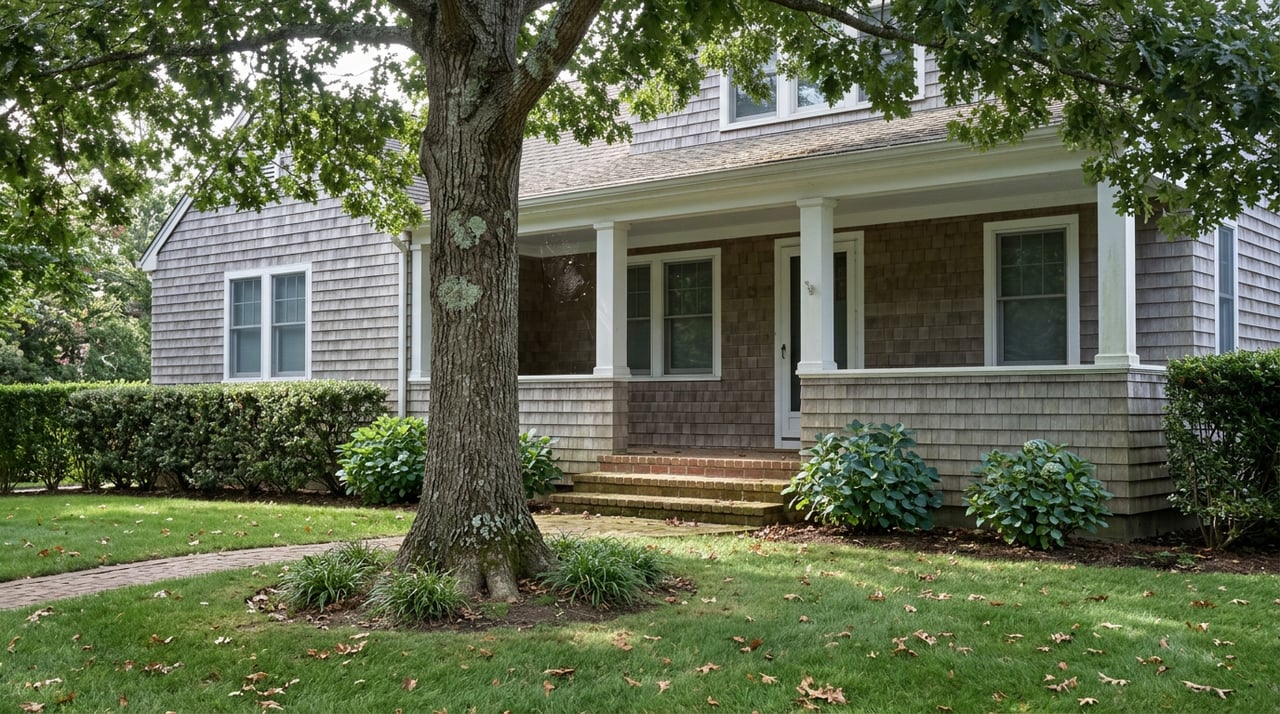
On October 17, 2025, the City of Burlingame's Parks and Recreation Department sent a letter to a homeowner on Columbus Avenue. A private arborist had flagged a Pittosporum tree growing too close to a neighboring foundation, with fungal fruiting bodies at the base and a structurally weak co-dominant trunk. The city approved the removal. Then came the number that makes this story worth telling: because no replacement tree could be planted on the lot, the in-lieu fee came to $8,125, calculated at $325 for every inch of the tree's diameter.
That single letter is a clean window into a rule most Burlingame homeowners have never read closely, and one that just changed. If you are planning to sell, remodel, or clear a yard for photos this year, the ordinance behind that fee is worth understanding before you call a tree service, not after.
The Ordinance Got Rewritten While Everyone Was Watching the Housing Market
Burlingame has protected trees since 1975, but the rulebook homeowners grew up with no longer exists. On December 16, 2024, the City Council repealed the old tree code and replaced it wholesale with Ordinance No. 2037, folding two separate chapters of the municipal code into a single Protected Tree Ordinance. City Arborist Richard Holz told the council the prior version had fallen behind current arboricultural standards and wasn't much of a deterrent to people who removed trees without asking first. Assistant City Attorney Scott Spansail pushed for the stronger penalties that made it into the final draft, Vice Mayor Emily Beach argued for giving staff more room to make science-based calls on the urban canopy, and Councilmember Michael Brownrigg reminded colleagues the rules weren't carved in stone and could always be revised again later, which helped keep the update moving.
For anyone prepping a home to sell, the practical result is that the process you might remember from a neighbor's project five years ago is not the process you'll encounter now. The in-lieu fee program is new. The broadened definition of what counts as a protected tree is new. The tighter link between tree permits and development review is new. None of it is hidden, but almost none of it shows up when you search for general advice on prepping a Peninsula listing.
The Threshold Nobody Measures Before They Call a Landscaper
Under the current code, any private tree with a trunk circumference of 44 inches or more, measured 54 inches above natural grade, is protected regardless of species. That works out to roughly 14 inches in diameter, which is a smaller tree than most people picture when they hear "protected." A healthy specimen planted in the 1990s can already clear that bar. Removing it, or pruning more than 25 percent of its crown or 15 percent of its roots within any 36-month window, requires a permit from the Parks Division.
The application itself is straightforward on paper. It costs $439 for a residential property and $740 for a commercial one, and it requires two photos and a location schematic. What takes time is everything downstream: the City Arborist inspects the tree, neighbors within 300 feet of the property get notified, and anyone who disagrees with the decision can appeal to the Beautification Commission. None of that happens on the timeline of a weekend yard cleanup.
What a Missing Replacement Actually Costs
The Columbus Avenue case is useful because it shows the fee formula in action rather than in the abstract. The city modeled its in-lieu rate on a similar fee structure used in Sacramento, landing on $325 per inch of a tree's diameter at standard height when a homeowner can't or won't plant a replacement. Here is what that formula looks like applied to a range of trunk sizes typical of an established Peninsula yard:
| Trunk diameter | Illustrative in-lieu fee at $325/inch |
|---|---|
| 14 inches (minimum protected size) | $4,550 |
| 20 inches | $6,500 |
| 25 inches (the Columbus Ave. case) | $8,125 |
| 30 inches | $9,750 |
These figures are simple arithmetic against the confirmed rate, meant to show the scale of the cost, not a quote for any specific tree. But the pattern holds regardless of the exact number: a mature tree that seems like an obvious candidate for removal before listing photos can turn into a five-figure line item if a replacement isn't planted on site. For most single-family lots in Burlingame, where planting space is already tight, that credit is often the harder condition to satisfy, not the permit fee itself.
Why This Breaks a Listing Timeline, Not Just a Yard-Prep Budget
Sellers rarely think of tree work as a scheduling risk. Staging, photography, and a launch date usually get planned around contractors, painters, and a stager's calendar. But a protected tree removal on a Burlingame property doesn't move on the timeline of a weekend project. The City Arborist has to inspect the tree in person, neighbors within 300 feet of the property receive a formal notice and a window to object, and anyone who disagrees with the outcome can still take it to the Beautification Commission. A decision that looked simple when prep started can still be open by the time you want to schedule photography.
This is exactly the kind of friction that belongs in a pre-listing conversation with your agent, not a surprise a stager or photographer flags the week before a shoot. If curb appeal work on your property might touch a tree near the 14-inch diameter mark, it's worth having that conversation and pulling the permit application before any other prep work begins, so the tree question resolves in parallel with everything else rather than holding up the launch date at the end.
The Two Corridors Where the Bar Is Higher
Two parts of Burlingame carry extra scrutiny beyond the standard permit process. Easton Drive west of El Camino and California Drive from Burlingame Avenue to Palm were both designated heritage groves in 1976, which means trees along those blocks get a higher level of review before any work is approved. And running along El Camino Real is the Howard-Ralston Eucalyptus Row, planted more than 130 years ago and listed on the National Register of Historic Places since 2012. Much of Burlingame's original tree canopy, including large portions of this row, traces back to planting work commissioned by the city's founders and carried out by John McLaren, the same designer behind Golden Gate Park.
If your property sits along either of these corridors, or backs up to one, plan for a longer runway on any tree-related work tied to a sale or remodel. A permit that clears in a few weeks on an ordinary residential block can take considerably longer here.
If You're Adding an ADU or Remodeling Before You List
Tree review isn't limited to removals. Any development or redevelopment project, meaning additions, accessory dwelling units, or substantial remodels that require a building permit, now has to include a Tree Disclosure Statement and, if trees are being preserved near construction, a Tree Protection Plan from a qualified arborist. That plan has to be verified by the city before building permits are issued, which means tree review can sit on the critical path of a renovation timeline just as easily as it sits on the critical path of a listing.
For sellers weighing a pre-market renovation, this is one more reason to loop in the tree question at the very start of planning rather than treating it as a yard-work afterthought once the contractor is already on site.
A Few Questions Worth Asking
How do I know if a tree on my property is protected? Measure the trunk circumference at 54 inches above the ground. If it's 44 inches or more, roughly 14 inches in diameter, it's protected under Chapter 11.06 of the Burlingame Municipal Code regardless of species.
Does the ordinance apply to city-owned street trees too? Yes, but through a separate process managed directly by the Parks Division rather than the private tree removal permit described here.
Can I avoid the in-lieu fee entirely? Often, yes, if there's room on the lot to plant an approved replacement tree that meets the size and species requirements in the permit. The fee applies specifically when replacement isn't possible.
Is there a faster path if the tree is hazardous? The ordinance allows emergency removal when disease or structural failure creates an immediate danger to life or property, and that determination can move faster than the standard review, but it still requires the City Arborist's sign-off.
If you're weighing whether a tree on your property needs to come out before your home goes on the market, or you're comparing what a renovation timeline actually looks like once permits are involved, that's exactly the kind of planning conversation worth having early. Comaroto Properties works through these details with sellers as part of preparing a home for market, well before a permit application becomes a deadline. Request a personalized consultation to talk through your specific property and timeline.